What Is Volume Eating? Calorie Density Explained With a Weighed Table
Volume eating means choosing foods with few calories per gram. Cucumber has 0.14 kcal per gram and almonds 5.84, so 200 kcal weighs 1,429 g in one and 34 g in the other.
Key takeaways
- Calorie density is kcal divided by grams: 0.14 kcal per gram in cucumber, 1.30 in cooked white rice, 4.08 in cheddar and 8.84 in olive oil, from USDA records.
- The same 200 kcal weighs 1,429 g as cucumber and 34 g as almonds, a 42-fold difference in weight.
- In a two-day trial of 18 women eating a similar weight of food, energy intake was 1,376 kcal in the low-density condition and 1,800 kcal in the high-density one.
- In a 42-woman trial, a 300 g first-course salad at 0.33 kcal per gram cut meal energy by 12%, and one at 1.33 kcal per gram raised it by 17%.
- A 356 g glass of water beside a meal did not change later intake, while the same water cooked into soup lowered it from about 396 kcal to about 289 kcal at lunch.
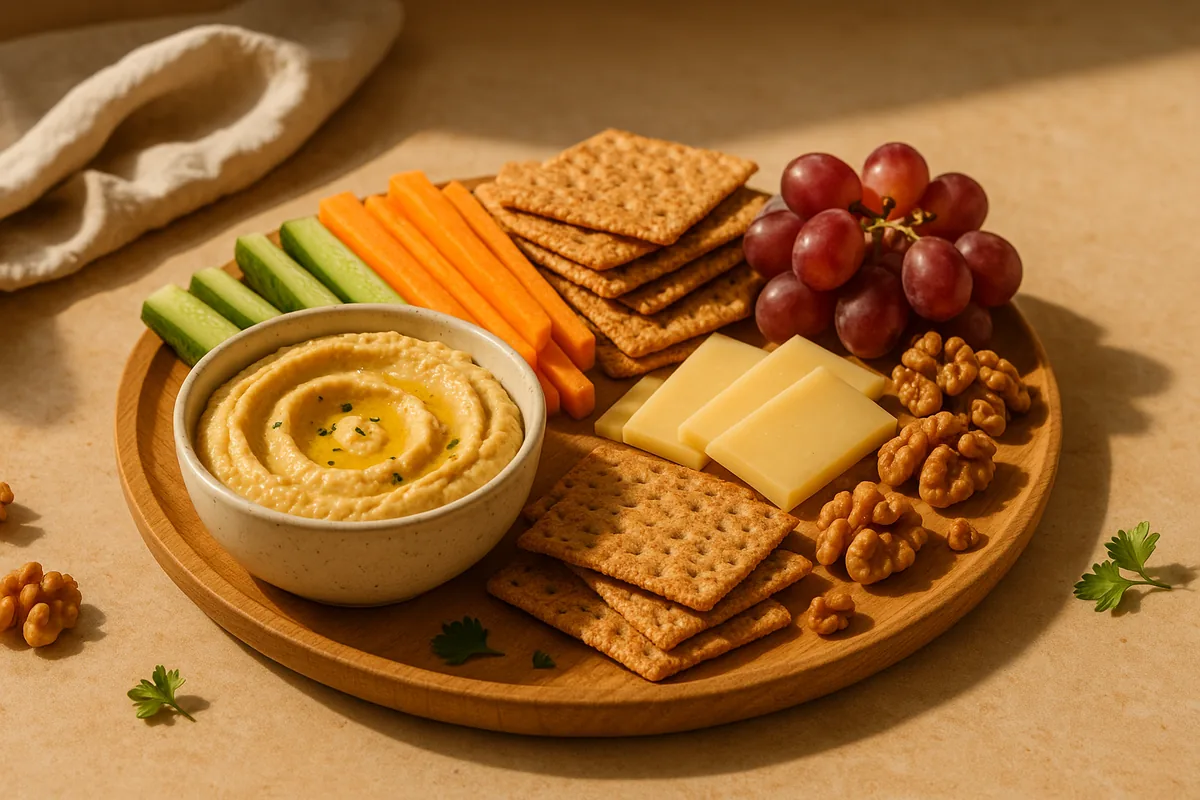
Volume eating means building meals from foods that weigh a lot for the calories they carry. The number behind it is calorie density, which is calories divided by grams. Cucumber has 0.14 kcal per gram and almonds have 5.84, so 200 kcal weighs 1,429 g in one and 34 g in the other. Trials from Barbara Rolls’s lab found that the weight of the first course changed what people ate next.
What is calorie density, and how do you work it out?
Calorie density is the energy in a food divided by its weight, written as kcal per gram. A methods paper on dietary energy density puts it the same way: food energy in kilocalories over food weight in grams. Water adds weight and no energy. That is why cucumber, at 95.9 g of water per 100 g, sits so far from almonds, at 4.26 g.
I worked out the table below from USDA FoodData Central records. Each row is one record, cooked or raw as stated. Where a Foundation record lists energy twice, I took the specific-factor value (cucumber is 14 kcal per 100 g in that column, not 16, and almonds 584, not 626). The other records list one energy value, and I used it.
| Food (state) | kcal per 100 g | kcal per g | kcal in 300 g | Grams for 200 kcal |
|---|---|---|---|---|
| Cucumber, with peel, raw | 14 | 0.14 | 42 | 1,429 |
| Potato, boiled in skin, no salt | 87 | 0.87 | 261 | 230 |
| Greek yogurt, plain, nonfat | 61 | 0.61 | 183 | 328 |
| Lentils, boiled, no salt | 116 | 1.16 | 348 | 172 |
| White rice, long-grain, enriched, cooked | 130 | 1.30 | 390 | 154 |
| Chicken breast, skinless, braised | 166 | 1.66 | 498 | 120 |
| Whole-wheat bread, commercially prepared | 252 | 2.52 | 756 | 79 |
| Cheddar | 408 | 4.08 | 1,224 | 49 |
| Almonds, raw | 584 | 5.84 | 1,752 | 34 |
| Olive oil | 884 | 8.84 | 2,652 | 23 |
The 300 g column is a yardstick, not a serving. Nobody eats 300 g of olive oil. It puts every row at one weight, so you can see what that weight costs. At 300 g, cooked white rice holds 390 kcal and boiled potato 261, a gap of 129 kcal. From top to bottom the table spans 63-fold, from 0.14 to 8.84 kcal per gram.
For swaps I use the last column. Take 150 g of cooked rice, which is 195 kcal. The same 195 kcal in boiled potato weighs about 224 g, so the swap gives you a bigger helping at equal energy.
State matters. Cooked rice has soaked up water, and dry rice would sit far higher. A raw and a boiled version of one food are two different rows, so weigh it the way the record describes it.
To try it yourself, take the label of one food you buy often. Energy per 100 g, divided by 100, is its kcal per gram.
What do the Rolls trials show about volume and fullness?
At the meal that follows, they show that lower density meant fewer calories eaten, with fullness holding steady. Three designs point the same way.
In a two-day study by Bell and colleagues, 18 women got main dishes of low, medium or high energy density. They ate a similar weight of food in all three conditions. Intake followed density: 1,376 kcal on the low, 1,519 on the medium and 1,800 on the high. The abstract reports these as condition means and does not say whether they are per day or for the two days, so I give them as stated. It lists kilojoules too (7,532 kJ is 1,800 kcal). Hunger and fullness did not differ.
A 2004 trial varied both the density and the size of a first-course salad. Forty-two women ate lunch weekly for seven weeks. The salad was compulsory. It weighed 150 g or 300 g, at 0.33, 0.67 or 1.33 kcal per gram, and the pasta after it was eaten to appetite. The researchers lowered the density by changing the amount and type of dressing and cheese. Against no salad, the large low-density salad cut meal energy by 12% and the small one by 7%. The high-density salads raised it, by 8% for the small and 17% for the large. Multiply it out and a 300 g bowl at 0.33 holds about 99 kcal, while 300 g at 1.33 holds about 399. Same weight on the plate, 300 kcal apart.
Soup gave the same pattern. Rolls, Bell and Thorwart gave 24 lean women three preloads of equal energy, 1,128 kJ or about 270 kcal. The paper reports kilojoules, and I converted them at 4.184 kJ per kcal. One was a chicken rice casserole, one the casserole with a glass of water (356 g), and one a soup made from the same ingredients. The lunch that followed was about 289 kcal after the soup, 396 after the casserole with water and 392 after the casserole alone. The women did not make up the difference at dinner. A 2007 trial of 60 adults put total meal energy, soup included, 20% lower than with no soup, a drop of 134 kcal. Chunky and pureed vegetable soups did equally well.
Read these as evidence about one meal. The first courses and side dishes were compulsory, and the volunteers were lean or normal-weight adults. The Bell, salad and casserole trials enrolled only women. The salad trial ran seven weeks and the soup trials four and five. None of it tells you what a year of ordinary dinners does.
Try it once. Start dinner with a weighed bowl of broth-based vegetable soup, keep the plate as it is, and compare what you log.
Does volume eating work for drinks?
Not in the papers I found. A drink is mostly water, so its calories per gram are low, and the formula makes it look like cucumber. In the trials I read, a drink did not fill the way food does.
The casserole study is the cleanest evidence. In that trial a 356 g glass of water beside the meal changed neither fullness nor later intake. Lunch came to about 396 kcal with the glass and 392 without it. The same water cooked into the soup brought lunch down to about 289 kcal. The authors conclude that foods with a high water content cut later intake more than drinking water with food does.
Calories you drink behave differently as well. In a crossover trial, DiMeglio and Mattes had 15 adults take 1,880 kJ a day (about 449 kcal) in two four-week periods, once as soda and once as jelly beans. On the jelly beans, people ate less of everything else and compensated by 118%. On the soda they did not, so total intake rose by the full load, and weight and BMI rose only in that period. That trial is small and is about liquid carbohydrate rather than volume, so I use it as a caution, not a rule.
Researchers deal with drinks by leaving them out. The methods paper notes that most studies calculate energy density from foods only, because drinks can swing the result. Its example breakfast of granola, milk and orange juice comes to 1.14 kcal per gram with the drinks in (430 kcal over 376 g). The granola alone is 2.37 (178 kcal over 75 g). Same breakfast, two answers.
For your own plate, weigh the food, leave the drinks out of the sum, and log them as calories on their own line.
How do you weigh your own plate?
Weigh each item as you eat it, cooked if it is cooked. Look up kcal per 100 g for each, multiply by grams and divide by 100, then add up the kcal and the grams. Total kcal divided by total grams is the plate’s calorie density.
Here are two plates I worked out on paper with the table’s records. Plate A is chicken, rice, cucumber and a measured spoon of oil. Plate B keeps the chicken and swaps the rice for potato, doubles the cucumber and halves the oil.
| Item | Plate A (g) | Plate A (kcal) | Plate B (g) | Plate B (kcal) |
|---|---|---|---|---|
| Chicken breast, braised | 120 | 199 | 120 | 199 |
| White rice, cooked | 150 | 195 | 0 | 0 |
| Potato, boiled | 0 | 0 | 250 | 218 |
| Cucumber | 100 | 14 | 200 | 28 |
| Olive oil | 14 | 124 | 7 | 62 |
| Total | 384 | 532 | 577 | 507 |
| kcal per g | 1.39 | 0.88 |
With potato in place of rice, plate B weighs 193 g more and holds 25 kcal less. Look at where that gap comes from. Halving the oil saves 62 kcal, and the potato and the extra cucumber put back 37 of them. The plate does not get much cheaper. It gets bigger. The oil is the lever, and a tablespoon of olive oil is the one number worth weighing every time.
If you already log by grams, you hold both numbers. The sum takes one division, and weighing food cooked, as served, keeps it honest.
Volume only means something against a daily budget, and what a calorie deficit is covers how to set one. The calorie calculator gives your own number. It applies the NASEM 2023 equations and never returns a figure below the usual floors for adults.
What doesn’t volume eating do?
The arithmetic stays as it was. A plate of low density still adds up, and a second helping after a full plate still counts. Weight of food is not energy.
Protein is a separate matter. The top rows of the table, cucumber most of all, carry very little of it, so a plate built only from them leaves protein short. Chicken, yogurt and lentils sit in the lower half of the table and bring protein along. That’s why how much protein you eat needs its own line. The foods that fill you up in a deficit article sets protein per calorie side by side for a longer list.
Nothing here ranks foods. Cheddar at 4.08 kcal per gram and almonds at 5.84 are food. A 49 g piece of cheese or 34 g of nuts comes to 200 kcal. Dense foods are small portions that carry a lot, which makes them the rows where weighing pays the most.
Some people shouldn’t aim at it at all. If you eat little already, feel full after a few bites or have lost your appetite, bulk is a burden and not a goal. If your weight is dropping and you did not plan it, that is a conversation for your doctor, not a table.
Last, the evidence is short. Seven weeks is the longest of the four meal trials above, and several of those meals began with a compulsory first course. The effect is solid at the meal. I wouldn’t stretch it further without a longer study.
Calorie density is only arithmetic done on a plate you already weigh. Weigh one meal this week, divide, and write the number next to it. If the number is 1.4 and you would like it nearer 0.9, you know which rows to change. The scale tells you whether it worked.
If counting calories has started to feel hard to stop, or eating feels out of control, talk to someone: ANAD in the US (1-888-375-7767), Beat in England (0808 801 0677), NEDIC in Canada (1-866-633-4220) or the Butterfly Foundation in Australia (1800 33 4673). If you’re in danger right now, call your local emergency number. Other UK numbers and crisis lines are on our crisis support page.
Questions and answers
What is volume eating?
It is choosing foods with few calories per gram so a meal weighs more for the same calories. Cucumber is 0.14 kcal per gram and almonds are 5.84 kcal per gram in USDA records, so 200 kcal is 1,429 g of one and 34 g of the other.
How do you calculate calorie density?
Divide the kcal by the grams. A plate of 532 kcal that weighs 384 g is 1.39 kcal per gram. Leave drinks out of the sum, as most researchers do, and log them as calories on their own.
Do drinks count as volume?
Not in the trials I found. A 356 g glass of water served beside a meal did not change fullness or later intake, about 396 kcal at lunch against 392 without it. The same water cooked into soup brought lunch down to about 289 kcal.
Does volume eating replace counting calories?
No, because weight of food is not energy. A larger plate at 0.88 kcal per gram still adds up, so volume is a way to choose what fills the calories you have already counted.
Who shouldn't aim for a bigger plate?
People who eat little already, feel full after a few bites or have lost their appetite. Bulk is not a goal for them, and weight loss you did not plan is a reason to see a doctor.
Sources
- Cucumber, with peel, raw (Foundation, FDC ID 2346406), USDA FoodData Central
- Nuts, almonds, whole, raw (Foundation, FDC ID 2346393), USDA FoodData Central
- Methods for calculating dietary energy density in a nationally representative sample (Procedia Food Science), PubMed Central
- Potatoes, boiled, cooked in skin, flesh, without salt (SR Legacy, FDC ID 170438), USDA FoodData Central
- Yogurt, Greek, plain, nonfat (Foundation, FDC ID 330137), USDA FoodData Central
- Lentils, mature seeds, cooked, boiled, without salt (SR Legacy, FDC ID 172421), USDA FoodData Central
- Rice, white, long-grain, regular, enriched, cooked (SR Legacy, FDC ID 168878), USDA FoodData Central
- Chicken, broiler or fryers, breast, skinless, boneless, meat only, cooked, braised (Foundation, FDC ID 331960), USDA FoodData Central
- Bread, whole-wheat, commercially prepared (SR Legacy, FDC ID 172688), USDA FoodData Central
- Cheese, cheddar (Foundation, FDC ID 328637), USDA FoodData Central
- Oil, olive, salad or cooking (SR Legacy, FDC ID 171413), USDA FoodData Central
- Bell EA, Castellanos VH, Pelkman CL, Thorwart ML, Rolls BJ. Energy density of foods affects energy intake in normal-weight women. Am J Clin Nutr 1998, The American Journal of Clinical Nutrition
- Rolls BJ, Roe LS, Meengs JS. Salad and satiety: energy density and portion size of a first-course salad affect energy intake at lunch. J Am Diet Assoc 2004, Journal of the American Dietetic Association
- Rolls BJ, Bell EA, Thorwart ML. Water incorporated into a food but not served with a food decreases energy intake in lean women. Am J Clin Nutr 1999, The American Journal of Clinical Nutrition
- Flood JE, Rolls BJ. Soup preloads in a variety of forms reduce meal energy intake. Appetite 2007, Appetite
- DiMeglio DP, Mattes RD. Liquid versus solid carbohydrate: effects on food intake and body weight. Int J Obes 2000, International Journal of Obesity